How to stop a puppy from biting: a calm step-by-step plan
Those needle teeth are normal, and so is wondering when it ends. Here's why puppies nip, a simple response the whole family can use, and how to get through teething with your hands and sleeves intact.
Puppy biting is one of the most common worries in the first months, and almost every puppy does it. The goal is to teach two things: human skin is delicate, and toys are what teeth are for. With a calm, steady response, most puppies improve week by week. This is general information, not veterinary advice, so check with your vet about your own puppy.
1. Why puppies bite
- It's how they explore. Puppies don't have hands, so everything new goes in the mouth.
- It's how they play. Littermates wrestle with their teeth. Your puppy is inviting you to do the same.
- Teething. Sore gums feel better with something to chew, especially between about 3 and 6 months.
- They're overtired or wound up. A puppy who has been awake too long, or played too hard, loses their manners fast.
- It works. If nipping makes people squeal, wave their hands and run, it's a great game.
None of this means your puppy is being mean or bossy. They simply haven't learned the house rules yet.
2. The simple response: four steps, every time
Pick one response and have everyone in the house use it. Being steady matters more than the exact method.
| Step | What to do | Why it works |
|---|---|---|
| 1. Go still | The moment teeth touch skin, stop moving your hands. You can add a short, calm "ouch". | Moving hands are exciting. Still hands are boring. |
| 2. Swap | Offer a toy right away and praise when your puppy takes it. | Shows your puppy what they can bite. |
| 3. Pause the fun | If they go back to your skin, stand up, fold your arms and look away for 10 to 20 seconds. If they keep at it, step behind a baby gate for up to a minute. | Biting makes the playmate go away. |
| 4. Start again calmly | Come back and play with the toy. Praise gentle play. | Gentle play keeps the game going. |
Keep pauses short. A puppy learns from many quick repeats, not from one long time-out. Expect to do this dozens of times a day at first.
3. Set your puppy up to bite less
- Keep a toy within reach in every room, and one in your pocket. A long tug toy keeps teeth far from fingers.
- Play with toys, not hands. Skip wrestling and hand games that teach your puppy that skin is a toy.
- Protect nap time. Young puppies need around 18 to 20 hours of sleep a day. After about an hour awake, offer a potty trip and a nap. Our crate training guide has a sample day.
- Short training games. Two or three minutes of "sit" or "touch" for treats gives a busy brain a job.
- Reward calm. When your puppy is lying quietly or chewing their own toy, say so and drop a treat. Calm should pay well.
- Wear the right clothes. Flowing sleeves, dangling laces and fluffy slippers are hard for a puppy to resist. If your puppy grabs a trouser leg, stand still and offer a toy.
4. Teething: what to expect by age
Puppies have 28 baby teeth, and 42 adult teeth replace them. Chewing ramps up while that happens. Ages vary by breed and size, so treat this as a rough guide.
| Age | What's happening | What helps |
|---|---|---|
| 8–12 weeks | Sharp baby teeth and lots of mouthy play. | The four steps above, soft toys and plenty of naps. |
| 3–4 months | Baby teeth start to fall out. You may find one on the floor or see a spot of blood on a toy. | Chilled chew toys and gentle rubber chews. |
| 4–6 months | Adult teeth push through. Chewing is at its peak. | A few chew toys on rotation and a puppy-proofed room. |
| 6–7 months | Most adult teeth are in and mouthing eases for most puppies. | Keep rewarding calm, gentle play. |
Want to see where your puppy is in human terms? Try our free dog age calculator, which adjusts for size.
5. Safe things to chew
- Puppy-sized rubber toys. Soft enough to give a little, too big to swallow.
- Something cold. A chew toy from the fridge, or a clean wet washcloth twisted and frozen. Use it while you watch, and take it away if your puppy starts tearing off pieces.
- Food toys. A rubber toy stuffed with part of their normal meal keeps a puppy busy and calm. Count it as part of the day's food. Our dog food calculator gives a starting amount to check with your vet.
- Rotate. Keep three or four toys out and swap them every few days so they stay interesting.
Skip very hard chews. A handy test: if you can't dent it with a thumbnail, it may be hard enough to crack a tooth. Avoid cooked bones, and anything small enough to swallow. If you're thinking about a frozen snack, look it up in our food safety checker first.
6. What not to do
- Don't hit, tap the nose or hold the mouth shut. It can make a puppy afraid of hands or turn biting into a rougher game.
- Don't shout. To an excited puppy, loud voices sound like more play.
- Don't pull your hand away fast. Jerking back makes your hand look like prey and can scratch your skin.
- Don't use the crate as punishment. A calm nap in the crate is fine. Being marched there in anger is not.
- Don't let it slide sometimes. If biting is funny on Saturday and forbidden on Monday, your puppy can't work out the rule.
7. Puppies and children
- Always supervise. Never leave a young child alone with a puppy, even a gentle one.
- Teach "be a tree". If the puppy nips, children stand still, fold their arms, look at their feet and call a grown-up. Running and squealing turns into a chase game.
- Give children a job. Tossing treats for a "sit", or dragging a long toy along the floor, lets them play without hands near teeth.
- Give the puppy a retreat. A crate or pen where nobody bothers them, so they can rest when they've had enough.
8. Is it working? What progress looks like
Progress is rarely a straight line. Look for these signs over two to four weeks:
- Bites get softer before they get rarer.
- Your puppy lets go faster when you go still.
- They start bringing you a toy when they're excited.
- The wild evening spell gets shorter.
Bad days happen, especially during teething or after a busy day. Go back to the four steps and add a nap.
When to call your vet
Call your vet, and ask about a qualified trainer or behaviorist, if you notice any of these:
- Biting that comes with a stiff body, a hard stare, growling or snapping, especially around food, toys or being picked up.
- Bites that often break the skin, or biting that is getting harder instead of softer.
- Hard biting that carries on after about six to seven months of age.
- A sudden change: a gentle puppy who starts biting may be in pain.
- Teething trouble such as a baby tooth still in place beside an adult tooth, very red or swollen gums, bad breath or not wanting to eat.
If a bite breaks someone's skin, wash it well with soap and water and get medical advice. Your vet knows your puppy best.
Puppy biting checklist
- A toy within reach in every room, and one in your pocket.
- Everyone in the house using the same four steps.
- Pauses kept short: 10 to 20 seconds, up to a minute behind a gate.
- Toys for play, never hands.
- A nap after about an hour awake.
- Something cold to chew during teething.
- No very hard chews, cooked bones or small pieces.
- Children supervised and taught to "be a tree".
- Calm behavior praised and rewarded every day.
- A vet or trainer called if biting gets harder or looks tense.
Just brought your puppy home? Start with our new puppy checklist, then set up a potty training schedule so the whole day runs to a rhythm.
Get the whole house on the same page
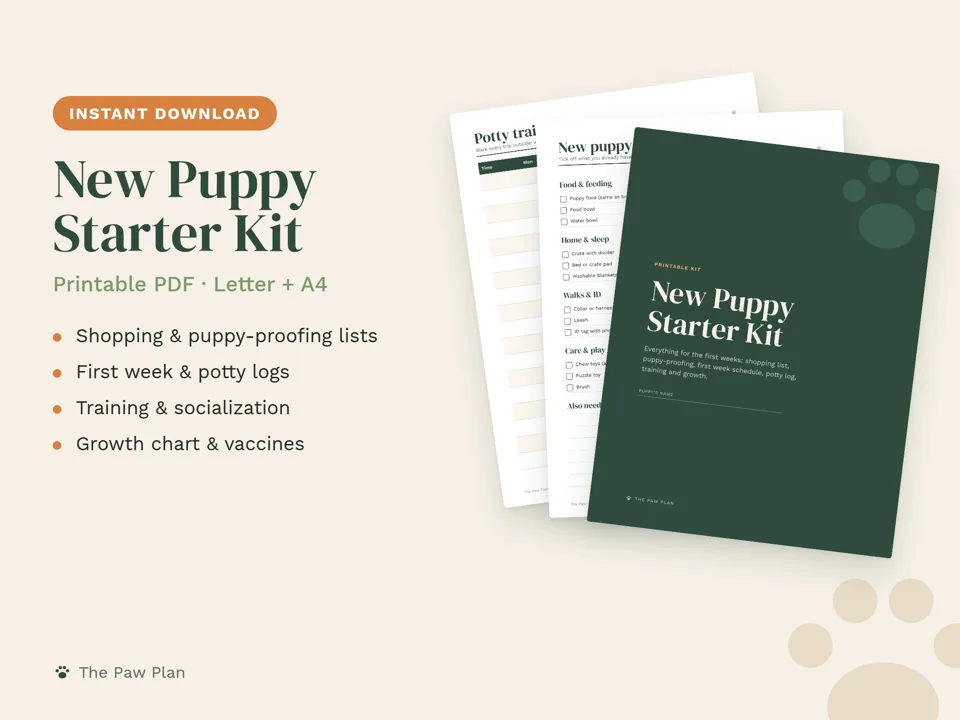
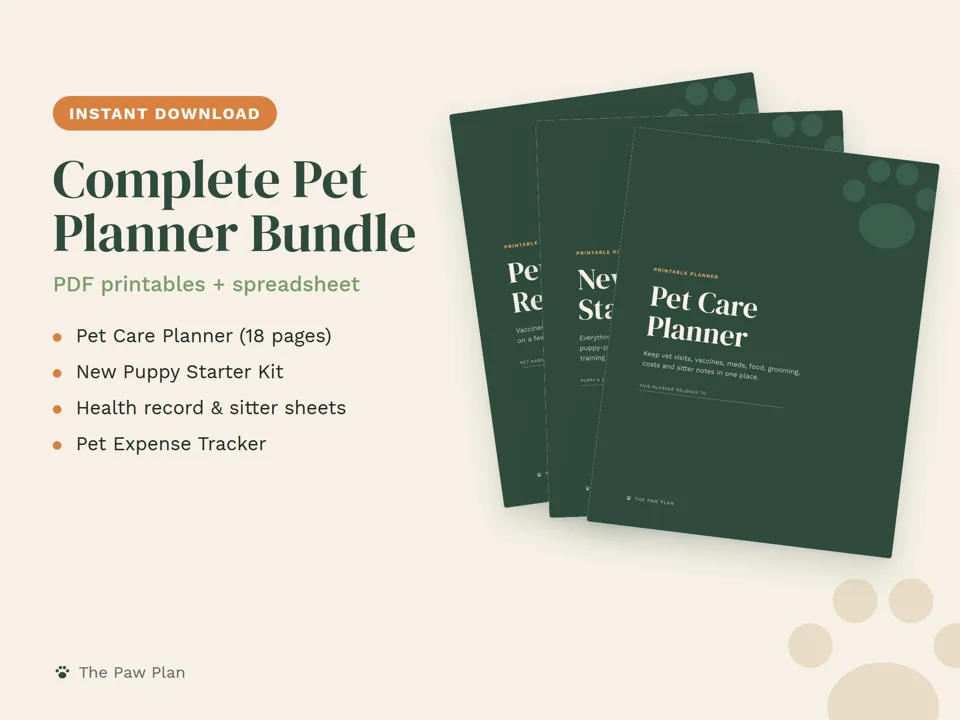
Our New Puppy Starter Kit has a training tracker, daily routine pages, a potty log and a vaccine record in one printable pack. Write your biting rules on it and stick it on the fridge.
Can my puppy chew on this?
Before you freeze a snack or share a bite, look it up. Our free checker covers 130 foods and plants, with a clear safe, caution or toxic answer for dogs and cats.
Shopping for a pet person?
Funny tees and mugs, embroidered hats, engraved bracelets and instant-download planners for dog and cat people. Christmas delivery: order by Nov 30 (personalized items by Nov 25).
Questions people ask
At what age do puppies stop biting?
Most puppies mouth the most between about 8 and 16 weeks, and it usually eases a lot once the adult teeth are in, at around six to seven months. It fades faster when everyone in the house responds the same way every time. If hard biting carries on past that age, ask your vet or a qualified trainer.
Is it normal for my puppy to bite me all the time?
Yes. Puppies explore with their mouths, play with their teeth and chew more while teething. Frequent nipping in play is normal for a young puppy. Biting that comes with a stiff body, a hard stare or guarding food or toys is different, and worth a call to your vet.
Should I yelp when my puppy bites?
It works for some puppies and winds others up. Try a short, calm "ouch" and stop moving. If your puppy backs off, praise and offer a toy. If it makes them more excited, skip the sound and just go still, then calmly end the game for a moment.
Why does my puppy bite more in the evening?
Evening wild spells are very often tiredness. Young puppies need around 18 to 20 hours of sleep a day, and an overtired puppy gets nippy the way a tired toddler gets cranky. A potty trip and a quiet nap usually help more than extra play.
What can I give a teething puppy to chew?
Puppy-sized rubber chew toys, a toy chilled in the fridge, or a clean wet washcloth that has been twisted and frozen, used while you watch. Skip very hard chews that could crack a tooth, and anything small enough to swallow. Ask your vet what suits your puppy's size and age.
Save this for later.
Pin it to your pet board so it's there when you need it.
The Paw Plan shares general information, not veterinary advice. Every pet is different, so check with your vet about your pet's health, diet and care.
More guides you'll like
How to crate train a puppy: a simple step-by-step schedule
How to pick the right crate, a gentle first-week plan, a sample day and night routine, how long is too long, and what to do about crying.
Read the guide →A puppy potty training schedule that works
Potty training is mostly about timing. Take your puppy out before they need to go, and reward them every time they get it right.
Read the guide →New puppy checklist: everything you need before day one
Bringing home a puppy is exciting and a little chaotic. This checklist covers what to buy, what to set up and what to do in the first week.
Read the guide →One easy pet-care tip a week.
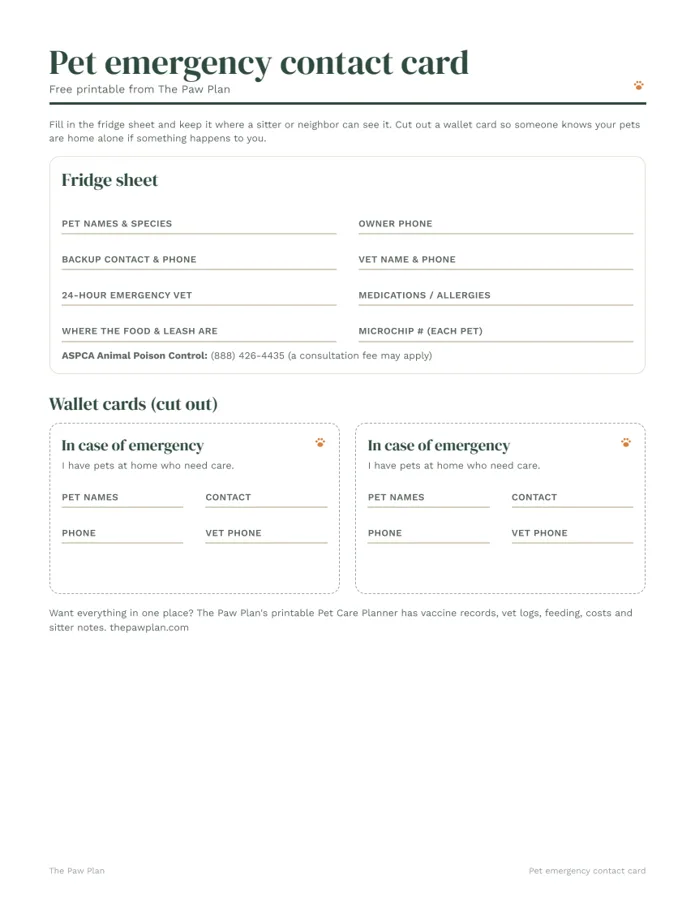
Short, practical and friendly. Join free and get our printable pet emergency contact card right away.
One email a week. Unsubscribe any time.