Why you need one
Emergency vet visits commonly cost $300 to $2,500, and serious surgery can cost much more. Without savings, many owners end up putting it on a credit card at a high interest rate.
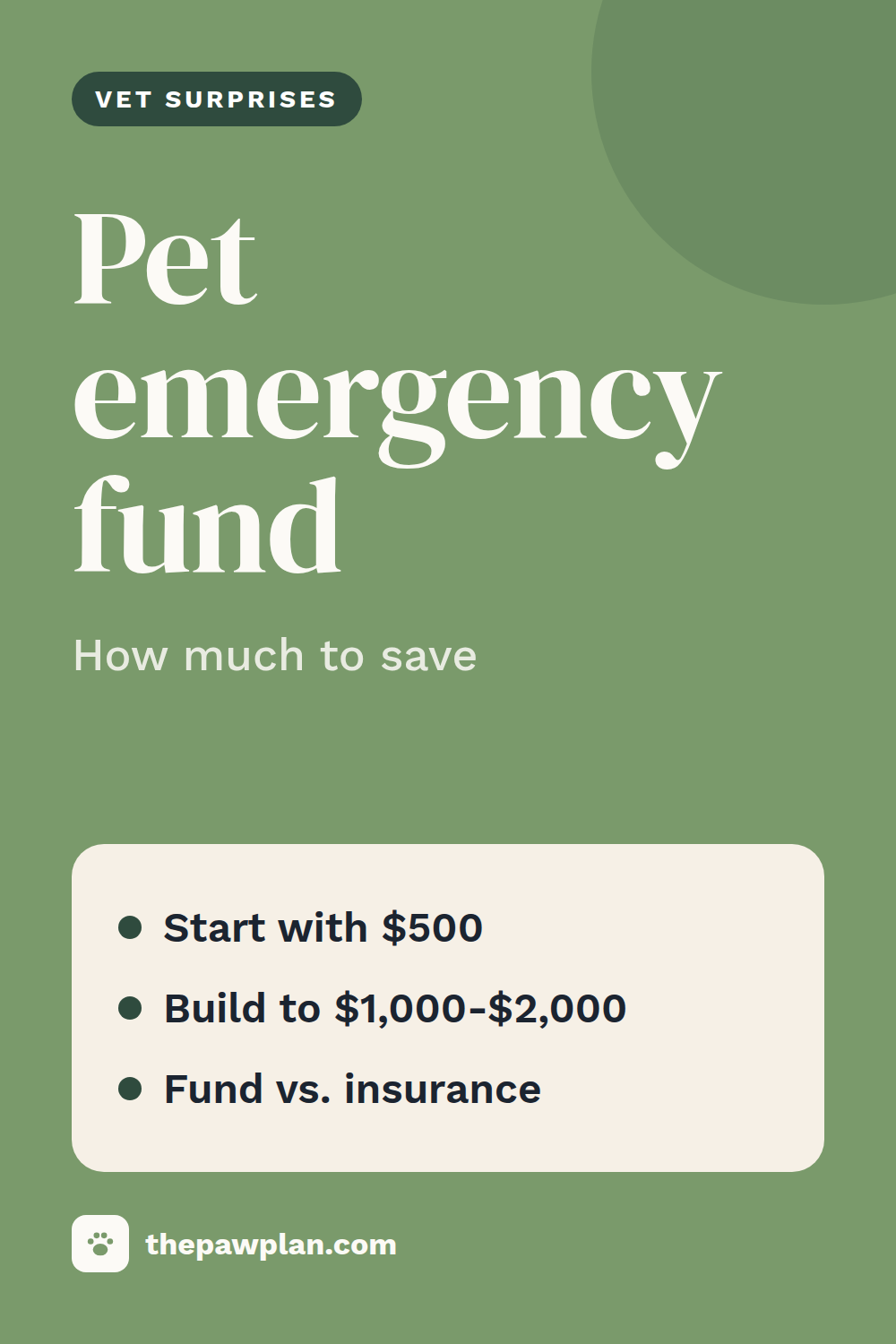
How much to save
- Starter goal: $500, enough for many urgent visits
- Solid goal: $1,000 to $2,000
- With insurance: save at least your policy's deductible plus a few hundred dollars
- Older pets or breeds with known health issues: aim higher
How to build it
- Open a separate savings account and name it after your pet.
- Set up an automatic transfer on payday, even $25 or $50.
- Add windfalls like tax refunds or gift money.
- Refill it after you use it.
Emergency fund vs. pet insurance
Insurance can cover very large bills that would take years to save for, while a savings fund covers deductibles, small emergencies and anything insurance excludes. Many owners use both. Read is pet insurance worth it? to compare.
Know exactly what your pet costs.
Our printable pet planners are coming soon. Join the free newsletter to hear first and get a free pet emergency contact card.
Try the numbers for your pet.
Our free pet cost calculator works it out in seconds. No sign-up.
Questions people ask
How much should I have in a pet emergency fund?
Start with $500, then build toward $1,000 to $2,000. If you have insurance, save at least your deductible plus a cushion.
Where should I keep a pet emergency fund?
In a separate savings account you can reach quickly, ideally one that earns interest, so it doesn't get spent on everyday things.
Can I use a credit card for pet emergencies?
You can, but high interest makes it expensive. A savings fund, even a small one, reduces how much you'd need to borrow.
Save this for later.
Pin it to your pet board so it's there when you need it.
The Paw Plan shares general information, not veterinary advice. Every pet is different, so check with your vet about your pet's health, diet and care.